



Category: Data Breaches

Your blog category

  • CERT-UA Warns of HTA-Delivered C# Malware Attacks Using Court Summons Lures

    CERT-UA Warns of HTA-Delivered C# Malware Attacks Using Court Summons Lures

    The Computer Emergency Response Team of Ukraine (CERT-UA) has warned of cyber attacks carried out by a threat actor called UAC-0099 targeting government agencies, the defense forces, and enterprises of the defense-industrial complex in the country.
    The attacks, which leverage phishing emails as an initial compromise vector, are used to deliver malware families like MATCHBOIL, MATCHWOK, and

  • AI Is Transforming Cybersecurity Adversarial Testing – Pentera Founder’s Vision

    AI Is Transforming Cybersecurity Adversarial Testing – Pentera Founder’s Vision

    When Technology Resets the Playing Field
    In 2015 I founded a cybersecurity testing software company with the belief that automated penetration testing was not only possible, but necessary. At the time, the idea was often met with skepticism, but today, with 1200+ of enterprise customers and thousands of users, that vision has proven itself. But I also know that what we’ve built so far is only

  • Google’s August Patch Fixes Two Qualcomm Vulnerabilities Exploited in the Wild

    Google’s August Patch Fixes Two Qualcomm Vulnerabilities Exploited in the Wild

    Google has released security updates to address multiple security flaws in Android, including fixes for two Qualcomm bugs that were flagged as actively exploited in the wild.
    The vulnerabilities include CVE-2025-21479 (CVSS score: 8.6) and CVE-2025-27038 (CVSS score: 7.5), both of which were disclosed alongside CVE-2025-21480 (CVSS score: 8.6), by the chipmaker back in June 2025.
    CVE-2025-21479

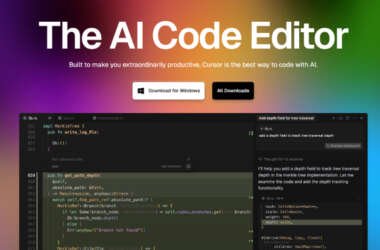
  • Cursor AI Code Editor Vulnerability Enables RCE via Malicious MCP File Swaps Post Approval

    Cursor AI Code Editor Vulnerability Enables RCE via Malicious MCP File Swaps Post Approval

    Cybersecurity researchers have disclosed a high-severity security flaw in the artificial intelligence (AI)-powered code editor Cursor that could result in remote code execution.
    The vulnerability, tracked as CVE-2025-54136 (CVSS score: 7.2), has been codenamed MCPoison by Check Point Research, owing to the fact that it exploits a quirk in the way the software handles modifications to Model

  • Misconfigurations Are Not Vulnerabilities: The Costly Confusion Behind Security Risks

    Misconfigurations Are Not Vulnerabilities: The Costly Confusion Behind Security Risks

    In SaaS security conversations, “misconfiguration” and “vulnerability” are often used interchangeably. But they’re not the same thing. And misunderstanding that distinction can quietly create real exposure.
    This confusion isn’t just semantics. It reflects a deeper misunderstanding of the shared responsibility model, particularly in SaaS environments where the line between vendor and customer

  • How Top CISOs Save Their SOCs from Alert Chaos to Never Miss Real Incidents

    How Top CISOs Save Their SOCs from Alert Chaos to Never Miss Real Incidents

    Why do SOC teams still drown in alerts even after spending big on security tools? False positives pile up, stealthy threats slip through, and critical incidents get buried in the noise. Top CISOs have realized the solution isn’t adding more and more tools to SOC workflows but giving analysts the speed and visibility they need to catch real attacks before they cause damage. 
    Here’s how

  • 15,000 Fake TikTok Shop Domains Deliver Malware, Steal Crypto via AI-Driven Scam Campaign

    15,000 Fake TikTok Shop Domains Deliver Malware, Steal Crypto via AI-Driven Scam Campaign

    Cybersecurity researchers have lifted the veil on a widespread malicious campaign that’s targeting TikTok Shop users globally with an aim to steal credentials and distribute trojanized apps.
    “Threat actors are exploiting the official in-app e-commerce platform through a dual attack strategy that combines phishing and malware to target users,” CTM360 said. “The core tactic involves a deceptive

  • Vietnamese Hackers Use PXA Stealer, Hit 4,000 IPs and Steal 200,000 Passwords Globally

    Vietnamese Hackers Use PXA Stealer, Hit 4,000 IPs and Steal 200,000 Passwords Globally

    Cybersecurity researchers are calling attention to a new wave of campaigns distributing a Python-based information stealer called PXA Stealer.
    The malicious activity has been assessed to be the work of Vietnamese-speaking cybercriminals who monetize the stolen data through a subscription-based underground ecosystem that automates the resale and reuse via Telegram APIs, according to a joint

  • ⚡ Weekly Recap: VPN 0-Day, Encryption Backdoor, AI Malware, macOS Flaw, ATM Hack & More

    ⚡ Weekly Recap: VPN 0-Day, Encryption Backdoor, AI Malware, macOS Flaw, ATM Hack & More

    Malware isn’t just trying to hide anymore—it’s trying to belong. We’re seeing code that talks like us, logs like us, even documents itself like a helpful teammate. Some threats now look more like developer tools than exploits. Others borrow trust from open-source platforms, or quietly build themselves out of AI-written snippets. It’s not just about being malicious—it’s about being believable.

  • Man-in-the-Middle Attack Prevention Guide

    Man-in-the-Middle Attack Prevention Guide

    Some of the most devastating cyberattacks don’t rely on brute force, but instead succeed through stealth. These quiet intrusions often go unnoticed until long after the attacker has disappeared. Among the most insidious are man-in-the-middle (MITM) attacks, where criminals exploit weaknesses in communication protocols to silently position themselves between two unsuspecting parties