Cybersecurity researchers have disclosed details of an advanced persistent threat (APT) group dubbed Silver Dragon that has been linked to cyber attacks targeting entities in Europe and Southeast Asia since at least mid-2024.
“Silver Dragon gains its initial access by exploiting public-facing internet servers and by delivering phishing emails that contain malicious attachments,” Check Point said
Author: VanshTheHacker
-

APT41-Linked Silver Dragon Targets Governments Using Cobalt Strike and Google Drive C2
-

CISA Adds Actively Exploited VMware Aria Operations Flaw CVE-2026-22719 to KEV Catalog
The U.S. Cybersecurity and Infrastructure Security Agency (CISA) on Tuesday added a recently disclosed security flaw impacting Broadcom VMware Aria Operations to its Known Exploited Vulnerabilities (KEV) catalog, citing active exploitation in the wild.
The high-severity vulnerability, CVE-2026-22719 (CVSS score: 8.1), has been described as a case of command injection that could allow an -
Fake Tech Support Spam Deploys Customized Havoc C2 Across Organizations
Threat hunters have called attention to a new campaign as part of which bad actors masqueraded as fake IT support to deliver the Havoc command-and-control (C2) framework as a precursor to data exfiltration or ransomware attack.
The intrusions, identified by Huntress last month across five partner organizations, involved the threat actors using email spam as lures, followed by a phone call from -
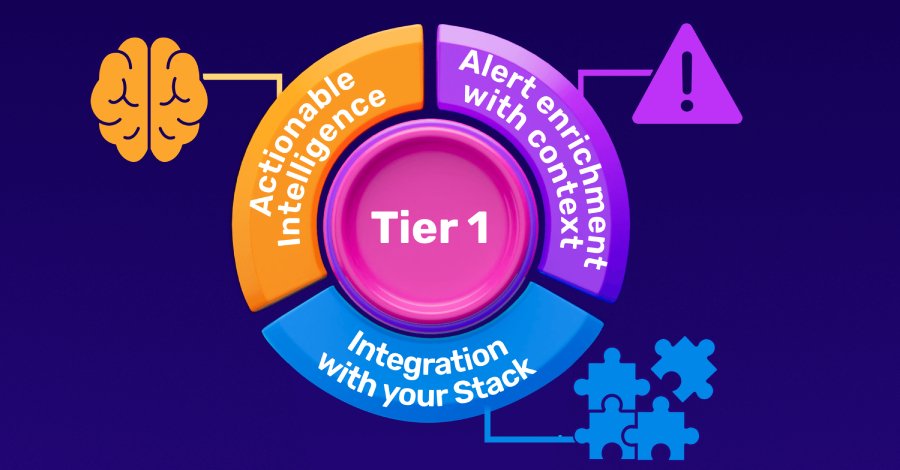
Building a High-Impact Tier 1: The 3 Steps CISOs Must Follow
Every CISO knows the uncomfortable truth about their Security Operations Center: the people most responsible for catching threats in real time are the people with the least experience. Tier 1 analysts sit at the front line of detection, and yet they are also the most vulnerable to the cognitive and organizational pressures that quietly erode SOC performance over time.
The Paradox at the Gate: -

Microsoft Warns OAuth Redirect Abuse Delivers Malware to Government Targets
Microsoft on Monday warned of phishing campaigns that employ phishing emails and OAuth URL redirection mechanisms to bypass conventional phishing defenses implemented in email and browsers.
The activity, the company said, targets government and public-sector organizations with the end goal of redirecting victims to attacker-controlled infrastructure without stealing their tokens. It described -

Google Confirms CVE-2026-21385 in Qualcomm Android Component Exploited
Google on Monday disclosed that a high-severity security flaw impacting an open-source Qualcomm component used in Android devices has been exploited in the wild.
The vulnerability in question is CVE-2026-21385 (CVSS score: 7.8), a buffer over-read in the Graphics component.
“Memory corruption when adding user-supplied data without checking available buffer space,” Qualcomm said in an advisory, -

SloppyLemming Targets Pakistan and Bangladesh Governments Using Dual Malware Chains
The threat activity cluster known as SloppyLemming has been attributed to a fresh set of attacks targeting government entities and critical infrastructure operators in Pakistan and Bangladesh.
The activity, per Arctic Wolf, took place between January 2025 and January 2026. It involves the use of two distinct attack chains to deliver malware families tracked as BurrowShell and a Rust-based -

New Chrome Vulnerability Let Malicious Extensions Escalate Privileges via Gemini Panel
Cybersecurity researchers have disclosed details of a now-patched security flaw in Google Chrome that could have permitted attackers to escalate privileges and gain access to local files on the system.
The vulnerability, tracked as CVE-2026-0628 (CVSS score: 8.8), has been described as a case of insufficient policy enforcement in the WebView tag. It was patched by Google in early January 2026 -

Google Develops Merkle Tree Certificates to Enable Quantum-Resistant HTTPS in Chrome
Google has announced a new program in its Chrome browser to ensure that HTTPS certificates are secure against the future risk posed by quantum computers.
“To ensure the scalability and efficiency of the ecosystem, Chrome has no immediate plan to add traditional X.509 certificates containing post-quantum cryptography to the Chrome Root Store,” the Chrome Secure Web and Networking Team said.
“ -

North Korean Hackers Publish 26 npm Packages Hiding Pastebin C2 for Cross-Platform RAT
Cybersecurity researchers have disclosed a new iteration of the ongoing Contagious Interview campaign, where the North Korean threat actors have published a set of 26 malicious packages to the npm registry.
The packages masquerade as developer tools, but contain functionality to extract the actual command-and-control (C2) by using seemingly harmless Pastebin content as a dead drop resolver and